Find The Best Attorney For Your Case
(312) 346-5320 or (800) 517-1614
Free Consultations - 24/7
No Appointment Needed, Just Call

Michael Helfand

We all know that car accidents occur every day. When you are injured and not at fault, dealing with an insurance company can be a whole new world and it can be stressful. Many insurance companies use this difficult time to take advantage of people. For them, it’s a business decision as they focus on their bottom line. They look for ways to reduce the amount that they are legally obligated to pay.

Here are five tricks we’ve seen over the years in helping people find the best Illinois car accident lawyer for their case:

1. They act like they are your best buddy: Most insurance adjusters are given scripts to use to guide what they say to you. Studies have shown that if they act nice to you, you will let them take advantage of you. Their goal is to gain your trust and make you think they are on your side. It’s a con. They are not looking out for you. They are looking out for themselves. In fact, many insurance adjusters get bonuses based on how much money they can save the company by not paying out claims.

2. They follow you on your social media: Insurance companies are looking for any reason to deny your case or reduce your benefits. They will be looking at your Facebook, Instagram, TikTok, etc. to see if you are posting anything that can create a defense for them. You should never discuss your case or injuries and shouldn’t be seen doing anything that could indicate you aren’t as hurt as you say you are. This is a form of legal surveillance. They are going to see what you did for fun before your accident and argue that could be the real cause of your injuries. It’s shameful, but allowed.

3. They will ask you to give a recorded statement: It’s not unusual for an insurance adjuster to say something like, “In order to process your claim, we need to record a statement from you to obtain details about the accident.” They imply that it’s required. It’s not and you absolutely shouldn’t give one. They will ask you questions that are scripted in a way to trip you up or misinterpret what you actually mean. They also will try to get you to say something incorrect and twist that to make you seem like a liar. The bottom line is you don’t have to give a recorded statement and shouldn’t.

4. They will ask for access to all of your medical records: Often the insurance company will send you a lot of paperwork which includes authorization to obtain medical records. The release will grant them access to any medical records that you’ve ever had. They don’t have a right to that. They can see records that relate to your accident and injury. But they don’t have a right to look at records that aren’t a part of your accident at all such as pregnancy records, cancer treatment, psychological care, etc. They are hoping to go on a fishing expedition to come up with a bogus reason to deny your case. Don’t let them.

5. They will try to get you to take a quick settlement: It’s not uncommon now to get a call from someone who was injured in a car accident a week ago to call us and relay that the insurance company offered a settlement already. Their goal is to get you to close out your case while you still need medical care. They are hoping that your inexperience will work against you and save them a ton of money. It’s probably the scummiest thing that they do and if you agree to it, they might be able to enforce a settlement even if you change your mind once you learn your rights.

The bottom line is that they are looking out for themselves and not you. If you have been hurt in a car accident and want to talk to an attorney for free, you can contact us any time ta 312-346-5320. We help everywhere in Illinois.

Every winter in Illinois we see an uptick in calls for people injured in a slip and fall. Those can be tough cases to win, but ultimately the case facts determine the result. These cases happen year round and are covered under an area called premises liability.

Premises liability rules encourage landowners to keep their property in a reasonably safe condition. The rules also compensate people who are injured as a result of the landowners’ negligence.  The key is that they have to be negligent. Premises liability rules also apply to businesses who rent commercial property (in other words, occupants). For example, Jewel-Osco may rent space in a strip mall and not own the property the store sits on. However, they are still required to keep their store in a reasonably safe condition. (To keep things simple, we will use the term “landowner,” assuming it includes occupants/businesses that rent space.)

There are different duties or standards required of landowners based on the type of visitors who are on the premises. The two types or visitors are invitees and trespassers.

Invitee: If a person if invited or welcomed on the premises for business, the landowner has a duty to maintain the premises in a reasonably safe condition. This does not mean the customer has to have a formal invitation, of course. Walmart, for example, wants people to come into their store and buy food, clothing, etc. Most people are invitees in most situations.

Trespasser: If a person is not welcome on a landowner’s property, the landowner still has a responsibility to refrain from a reckless disregard of the safety of others. In other words, they can’t intentionally be careless or cause harm. A trespasser isn’t always someone committing a crime. It could be as simple as a kid who runs on to your property to get the ball they accidentally threw in to your yard.

If an invitee or trespasser is injured on a landowner’s property, and they can prove that the landowner failed to meet the duty required, that landowner may be on the hook to pay for their medical bills, lost wages, future medical care, etc. For example, if they knew there was a hole in their yard and covered it with leaves, they could be responsible. If Jewel knows that a freezer is leaking and you slip on a wet floor as a result, they could be held responsible.

Typically, the landowner has insurance and the insurance company will make the payout. Insurance companies, however, are not usually eager to cooperate and meet all of the injured person’s demands and will look for ways to deny your claim. Quite often they will turn you down without justification. That’s where a premises liability attorney comes into play.

Slip and falls aren’t the only type of premises liability lawsuit out there. Others include:

  • Porch CollapsesEspecially in Chicago, there are a lot of older buildings with porches, many that were poorly designed or are not maintained. Every year people get seriously injured when the porches collapse. We find a lot that the wood has rotted and nobody did anything about it.
  • Inadequate Security – Some buildings have doormen who let people in the building that shouldn’t be there. Other times there are broken gates or locks that don’t work. If you get attacked or injured due to this negligence, you could have a case.
  • Dog Bites – While most dogs are great, some are dangerous. Property owners can be liable for bites and attacks by their animals.
  • Fires – Not every fire is the fault of a building owner. But if it happens due to poor electrical wiring or an injury occurs because there are no smoke detectors, then it’s really likely the building owner is negligent and can be sued.

Hiring a reputable and experienced premises liability lawyer can make a huge difference on whether the insurance company will pay, how much the settlement will be, and how quickly the injured person can receive a settlement. These attorneys work on a contingency basis, so the client pays them nothing upfront. The attorney receives a portion of the settlement that they obtain for their client. The typical fee is 1/3 of what is recovered.

One unique point about premises liability law in Illinois addresses ice and snow. The owner or occupant of a property is not required to remove ice or snow resulting from natural accumulations. It is not realistic to expect property owners to keep all areas where people walk clear from ice and snow constantly during the winter months. In order to have a successful ice and snow injury claim, the plaintiff has to prove they were injured as a result of unnatural accumulations. An example of that would be if ice gathered in an area that fell off of an awning or downspout.

We know that Illinois premises liability law can be a bit confusing. If you have any questions, contact us and we would be happy to hear about your unique situation and offer you some free advice. And if needed, we will refer you to a lawyer with a track record of success in winning these cases. All calls are free and confidential.

We are experienced Illinois attorneys who will talk to you for free. If you would like to speak with a lawyer in confidence, call us any time at 312-346-5320.

One of the greatest cons that exists in this world is how corporations get away with theft. If you go in to a store and steal an item of clothing that costs $50, you will get arrested and charged with retail theft. Yet employers steal billions from employees with wage theft every year and the worst thing that can happen to them is having to pay it back. And in most cases nothing happens at all.

So what is wage theft?

It’s pretty simple. It’s when your employer doesn’t pay you something you’ve earned. It happens with employers big and small and in so many different ways. Here are some real examples in Illinois that we’ve been able to help with:

  • A restaurant was only paying servers their tips and never giving a paycheck.
  • Automatically taking out 30-60 minutes a work day for a meal break even when the employee isn’t actually taking one. In Illinois breaks must be at least 30 minutes to be permissibly unpaid.
  • Underpayment of work. Some employers, often restaurants, will provide what is called shift pay. Meaning they will say we are going to pay you $X per shift. Often it’s something like three hours of pay even if you are there 6-8 hours. It’s very illegal.
  • Non-payment for work off the clock. Many employers will ask you to do work before or after you’ve clocked in. This could be responding to work related calls or emails after hours. It could be mandatory work before you clock in. It could be for work related travel time. If you don’t get paid or overtime then they are stealing from you.
  • Off the clock straight time work. We see this a lot with landscapers or other jobs where they pay you cash but not overtime and don’t document your actual hours worked.
  • Misclassification. Often workers are classified as independent contractors when that’s b.s. If the company has control over you, you are an employee. They do this to avoid paying taxes and to make it so they can pay you a flat rate for your work instead of following wage laws.
  • “Boot up cases.” This happens a lot in call centers and other jobs that use computers. You have to “boot up” your computer before work can actually start. So maybe your shift pay starts at 9 a.m. but they also want you to work right at 9. So they require you to get your computer ready 5-10 minutes before but don’t pay you for that time.
  • And of course there is tip theft which is one of the biggest. Employers will take pooled tips and give them to workers that shouldn’t get them like managers or take the tips for things like employee meals, charity events, etc. Even if they do nice things with it, it’s still your money and it’s still theft.

There are other examples too. Bottom line is that it’s illegal and they’ll never go to jail for it. But you can get this money back. If you’d like to speak with an employment lawyer in Chicago who can give you a free consultation, contact us any time to learn if you have a case and what steps can be taken.

See also: 30 Crappy Things Your Employer Can Get Away With

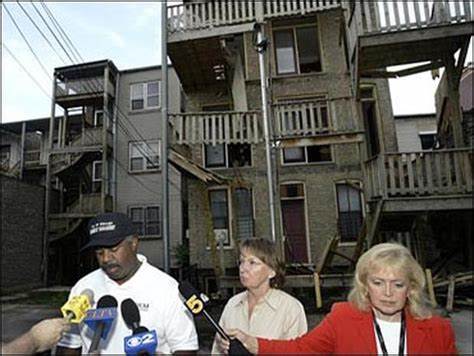
Spring is upon us in Illinois. It’s the time of year when we get fooled in to thinking winter is over. People spend time outside after hibernating. When the weather is good, parties do happen. And often due to the effects or winter along with bad construction, porches collapse at those parties and people get injured.

It’s not a unique situation. Sadly, when you search “Chicago porch collapse” in Google, a number of articles pop up. For example, on Friday, June 24, 2022, two people were injured when a porch collapsed in Lincoln Park. Also in 2022, on April 12, a West Side porch collapse killed a 53-year-old man and seriously injured two others.

In fact, the deadliest porch collapse in United States history occurred in Chicago on June 29, 2003. Shortly after midnight, a back porch on the third floor of a Lincoln Park building collapsed, falling into the basement level as it took down the intervening floors as well. Thirteen young party goers died and fifty-seven others were seriously injured.
A $16.6 million settlement was obtained by a law firm representing 14 of the victims (or victims’ families). The building owner and porch contractor settled for the full amount of the available insurance. An architect determined that the porch could have withstood the load placed on it if it had been constructed in compliance with city code. However, city inspectors had not issued any citations.

Porch collapses are not unique to the City of Chicago. Unfortunately, they happen all over the Chicagoland area and well as throughout the state, and such an incident can occur with a deck or balcony as well.

The injuries and damages from a case are typically clear cut. Due to the height of the porch or balcony, serious injuries or death can occur. Head, neck and spine injuries and broken bones are common.

What is not always clear is the cause of the collapse and who is at fault. Depending on the cause, various parties may be responsible.

In some cases, the construction company may be held liable. Perhaps they used inferior materials, followed improper construction techniques or failed to follow industry safety standards.

In other instances, a company that manufactured the materials used in the construction of the porch or balcony or deck can be held liable if it is clear that the materials, such as the supporting beams, were defective.

Finally, the owner or manager of the property may be held responsible under premises liability law. Perhaps they knew, or should have known, that the structure was in bad shape, but they failed to make the necessary repairs.

Other factors come into play on these cases, such as whether the porch was on residential or commercial property. Were the injured people guests, business patrons or trespassers? Were there warnings about the poor state of the porch?

If you or someone you know was injured or killed in a porch or balcony collapse, we work with attorneys who have great success with these difficult lawsuits. There is no cost to call us or to hire an attorney we recommend. If you’d like to speak with one of our lawyers for free, contact us any time at 312-346-5320.

Stealing from clients. Committing crimes. Lying. Acting like an asshole. Falsifying documents. There are a lot of reasons attorneys lose their license in Illinois. Here are 23 of them in the last year who have been disbarred or suspended for at least a year. All of the information comes from the ARDC which is the licensing and disciplining organization for Illinois lawyers. I highly recommend you check an attorney’s status there before hiring them.

Richard Gannett Mr. Gannett was licensed to practice in Illinois in 1981 and in Massachusetts in 1982. The Supreme Judicial Court of Massachusetts disbarred him for intentionally converting over $42,000 that he was supposed to be holding in connection with an insurance dispute. The Supreme Court of Illinois imposed reciprocal discipline and disbarred him.

Jeffrey McIntyre Mr. McIntyre, who was licensed in 1994, was suspended for 18 months and until further order of the Court. His misconduct arose from his December 2017 guilty plea to a charge of battery after he punched an employee of a tavern and his October 2018 guilty plea to operating a motor vehicle while intoxicated, his third conviction for driving while intoxicated.

Andrew Babcock Mr. Babcock, who was licensed in 1992, was disbarred on consent. In September 2021, a Michigan jury found him guilty of three counts of criminal sexual conduct.

Philip Koenig Mr. Koenig, who was licensed in 1975, was suspended for one year for intentionally converting $70,076 in funds that were owed to his client after the settlement of a lawsuit over the construction of a will.

Brian Sides Mr. Sides, who was licensed in 2002, was suspended for one year and until further order of the Court. He made false or reckless statements about the integrity of a federal bankruptcy judge in nine motions filed in the bankruptcy or federal district court.

Stephen Newport Mr. Newport was licensed to practice in Illinois in 1990 and in Iowa in 1978. The Supreme Court of Iowa suspended him with no possibility of reinstatement for one year for sexually harassing two clients. The Supreme Court of Illinois imposed reciprocal discipline and suspended him for one year and until he is reinstated to the practice of law in Iowa.

Robert Roth Mr. Roth, who was licensed in 1979, was disbarred on consent. His misconduct arose from his June 2021 conviction in Lake County for aggravated driving under the influence of alcohol, causing the death of another. Following his conviction, Mr. Roth was sentenced to five years in prison.

Felipe Gomez Mr. Gomez, who was licensed in 1988, was suspended for three years and until further order of the Court. In three separate legal matters, he repeatedly sent threatening and harassing email messages to other attorneys.

Jessica O’Brien Ms. O’Brien, who was licensed in 1998, was disbarred. She has been suspended on an interim basis since April 26, 2018, after a federal jury in Chicago found her guilty of the crimes of mail fraud and bank fraud based on her involvement in a scheme to obtain bank loans by making false statements about her income and liabilities.

Carlo Palladinetti Mr. Palladinetti, who was licensed in 1985, was disbarred. He was found guilty of bank fraud after he participated in a multi-year scheme that provided fraudulent information to lenders in order to qualify buyers for mortgage loans to purchase condominium units owned by other participants in the scheme.

Dale Halling Mr. Halling was licensed to practice in Illinois in 1993 and in Colorado in 1995. The Supreme Court of Colorado disbarred him for not diligently representing three clients in patent matters, failing to keep clients informed about the status of their matters, converting client funds in two of the matters, and abandoning two of the clients. The Supreme Court of Illinois imposed reciprocal discipline and disbarred him.

Valerie Franklin Ms. Franklin, who was licensed in 1994, was disbarred for intentionally converting more than $122,000 owed to ten separate clients in workers’ compensation and other matters.

James Leone Mr. Leone was licensed to practice in Illinois in 1981 and in Florida in 1985. In December 2020, the Supreme Court of Florida granted Mr. Leone’s petition for disciplinary revocation of his law license, with leave to seek readmission after five years. He had misrepresented facts to a third person in connection with litigation over a piece of property on which Mr. Leone and his wife had paid past-due property taxes. The Supreme Court of Illinois imposed reciprocal discipline and suspended him until he is reinstated to the practice of law in Florida.

Michael Ries Mr. Ries, who licensed in 1998, was suspended from the practice of law for two years and until he is reinstated to the practice of law before the United States Patent and Trademark Office. He engaged in a number of criminal acts involving incidents of domestic violence and driving while over the legal limit for alcohol, and he mishandled three patent applications.

Beau White Mr. White was licensed in Illinois in 1998 and in Indiana in 1999. The Indiana Supreme Court suspended him for three years, without automatic reinstatement, for failing to act with diligence in a criminal matter and a paternity case, failing to properly communicate with clients, and not cooperating in his own disciplinary proceedings. The Supreme Court of Illinois imposed reciprocal discipline and suspended him for three years and until he is reinstated in Indiana

Dean O’Connor Mr. O’Connor was licensed in Illinois in 1980 and in Arizona in 1988. An Arizona disciplinary hearing panel disbarred him for engaging in a pattern of misconduct in three separate matters. In one matter, he converted $40,000 in funds belonging to a bankruptcy estate and disbursed over $230,000 in insurance proceeds to his client without disclosing the receipt or disbursement of those proceeds to the court. In another matter, he did not adequately communicate with his client and failed to research issues involved in his client’s matter. In a third matter, he advanced non-meritorious claims and contentions, made false representations in a court filing, and made false statements to the Arizona State Bar during its investigation into his conduct. The Supreme Court of Illinois imposed reciprocal discipline and disbarred him.

Craig Sherman Mr. Sherman was licensed in Illinois in 1967 and in Florida in 1975. The Supreme Court of Florida permanently revoked his admission to the Florida Bar after he filed a petition for disciplinary revocation without leave to apply for readmission, which stated that he was the subject of a disciplinary grievance alleging, in part, misuse of funds totaling $4,175,000. Mr. Sherman agreed that there was factual predicate for disciplinary action against him. The Supreme Court of Illinois imposed reciprocal discipline and disbarred him.

John Tresslar Mr. Tresslar was licensed in Missouri in 1985 and in Illinois in 1986. The Supreme Court of Missouri disbarred him for failing to diligently represent a client, failing to maintain complete records for his trust account, misappropriating more than $68,000 belonging to his clients, and making misrepresentations to a tribunal. The Supreme Court of Illinois imposed reciprocal discipline and disbarred him.

Ryan Kosztya Mr. Kosztya, who was licensed in 2002, was suspended for two years and until he completes the ARDC Professionalism Seminar, followed by a one-year term of probation with conditions. Mr. Kosztya dishonestly misappropriated over $58,000 from clients in two matters and then made false statements to the clients and a court to hide his use of the funds.

Jaroslaw Szymanski Mr. Szymanski, who was licensed in 2013, was suspended from the practice of law for two years and until further order of the Court. In 2016, Mr. Szymanski was arrested and charged with aggravated domestic battery and domestic battery arising from an incident in which he pushed his spouse against a wall and placed his hands around her throat, causing a partial obstruction of her breathing. Mr. Szymanski later pled guilty to misdemeanor battery in connection with that incident. In 2018, Mr. Szymanski again was arrested for an incident in which he punched his spouse in the arm and attempted to punch her in the stomach, for which he was charged with two counts of resisting a peace officer and two counts of domestic battery. Those charges were later dismissed.

Sheldon Banks Mr. Banks, who was licensed in 1965, was suspended for two years and until further order of the Court and was required to demonstrate that he has paid $7,000 in restitution, plus interest, to his former client’s sister prior to petitioning for reinstatement. While representing the client in a criminal matter, he did not respond to the client’s family’s requests for information about the case, collected an unreasonable fee of $9,000 when he made no court appearances and filed no pleadings or briefs, and returned only $2,000 of the fee. He also did not respond to an ARDC subpoena.

Lori Kieffer Ms. Kieffer was licensed in Illinois in 2001 and in Iowa in 2002. The Supreme Court of Iowa suspended her with no possibility for reinstatement for one year. While representing a client in a criminal matter, she falsified her client’s signature on a written arraignment form and then made misrepresentations to the court about what she had done. The Supreme Court of Illinois imposed reciprocal discipline and suspended her for one year and until further order of the Court.

K.O. Johnson Mr. Johnson, who was licensed in 1996, was disbarred on consent. His misconduct arose from his August 2021 convictions of four counts of bankruptcy fraud and three counts of concealment of assets, for which he was sentenced to two years in prison.


We are experienced Illinois attorneys who since 2001 have helped hundreds of thousands of people with their legal issues. Please call us at 312-346-5320 to speak with a lawyer for free and in confidence.

To bring a class action lawsuit in Illinois, you have to show that numerous people suffered some sort of harm in a similar way.  Typically you are looking at least 30 people, but most class action lawsuits involve hundreds if not thousands of people and occasionally millions. So if your boss is terrible to you or sexually harasses you, that would be an individual case. On the other hand, if your company is mis-classifying thousands of workers and denying them pay, that could be a class action. If your car has a bad engine, that would probably be an individual case. On the other hand, if your car design makes it at risk of blowing up, that would likely be a class action.

There is a lot that attorneys who file class action lawsuits look for in deciding whether or not to bring a case.  This list includes deciding that an individual lawsuit wouldn’t make sense and that the number of people harmed makes a class case logical. But before they do anything they will look for one thing. Is your case subject to an arbitration clause?

Arbitration clauses are hidden contract details that most companies use. Basically they say that if you have a dispute with them, you agree to resolve it via arbitration. It’s something you’ve agreed to likely hundreds of times without realizing it. Because you’ve agreed to arbitration, it makes a class action lawsuit not possible. This all started to happen when George W. Bush was in office and it literally has allowed major companies to get away with a lot of bullshit.

So when you get screwed over by Direct TV, Verizon, Amazon, etc. and realize it’s happening to a lot of other people, you likely don’t have a class action lawsuit (nerd lawyer in me must say don’t make any final decisions from reading this blog post. You should consult with us or another law firm). It can be really frustrating because these companies know that they can rip you off of a small amount of money and there’s usually not much you can do about it. You could go to arbitration, but most people won’t do that just out of principle because their time is worth more than a small amount of money. You certainly don’t want to pay a lawyer a couple thousand dollars to get back $100.

We are starting to see employers add these clauses to their employees as well. It’s often in an attempt to avoid accountability for wage theft by them. Sometimes those individual cases are still worth it, but their theory is that if they can get away with it against most employees they will save millions if not more.

I’ve sadly over the last 20 plus years heard so many stories of cases that would be class actions if not for these clauses. There is no bigger tool for corporations to screw over the little guy than this.  While you should still consult with a lawyer before making any decisions, you can also file a complaint with the Illinois Attorney General as they are not restricted by these shameful arbitration clauses.

The good news is that not all class actions have been killed off. There aren’t arbitration clauses typically when you buy something at a store, or if your data was leaked, in false advertising or junk texts. There are many hundreds of other situations too. So the bottom line is that if you want to discuss a potential case, we are happy to talk with you any time.

We are attorneys who will help you find the best Illinois medical malpractice law firm for your case. If you would like a free consultation, please call us at 312-346-5320. For information on lawsuits from intubation errors, please read on.

Intubation is a common procedure in which a medical provider inserts a breathing tube into the trachea, or windpipe, of a person. The purpose of intubation is to maintain an open airway and get oxygen to the body. It can be the difference between life and death. Inserting the tube is a brief procedure, lasting only a few minutes. But a person can stay intubated (with a breathing tube in place) for days or weeks.

One of the most common reasons for intubation is abnormal breathing. It became well known with Covid’s arrival to our world, but is used for many other medical reasons. Heart disease, lung disease, and infections like pneumonia and sepsis often cause severe breathing problems. When the body is not able to properly inhale (to get oxygen) or exhale (to release carbon dioxide), healthy organs may stop working. Neurological damage, coma, or death may result.

Two big additional reasons for intubation are trauma and surgeries. Injury to any part of the airway, from a car accident or any other traumatic event, can affect how a person breathes. If emergency or planned surgery requires general anesthesia, the patient will be put to sleep and intubated. This enables the anesthesiologist to provide oxygen and medications during the surgery.

In most cases, a person will fully recover from intubation with no long-term side effects. It may take a few hours or it may take a few days. However, failed intubations do occur. Sometimes the medical provider performing the intubation accidentally places the tube down the esophagus instead of the trachea. They may unnecessarily delay the intubation or fail to properly assess the patient’s anatomical features and airway needs. They may not fully understand tracheal tube mechanics or how to use a laryngoscope blade. The medical personnel may have had a lack of communication.

Healthcare providers in the ER, anesthesiologists, and paramedics have specialized in training in successful and safe intubations. But when they make a malpractice error, and/or respond in the wrong way to that error, a patient can suffer from:

• Brain damage or death
• Stroke
• Hypoxia
• Damage to the lungs, throat, esophagus, or trachea
• Vocal cord paralysis

The biggest reason for intubation lawsuits are for catastrophic injuries from such as brain damage from loss of oxygen due to an obstructed airway or being disabled from a stroke or other injury. Whatever the reason, if you or a family member has suffered from being intubated improperly, contact us so we can connect you with a lawyer who has experience with these cases to investigate what happened and bring a lawsuit for you. The lawyers we recommend are the best of the best who have a track record of success an they only get paid if they win.

We are experienced lawyers who help people who are injured in Illinois car accident cases. We can help you when you are not primarily at fault for the accident occurring.  Usually, this means that the police report blames someone else, but that’s not always the case. Some law firms will only handle the injury aspect of a car accident. That means if you are having trouble getting your car replaced, they won’t help you. To me, that is terrible lawyering. If you hire an attorney for an accident case, you should get help with everything related to that accident.

The reason some of these firms don’t handle property damage is because they won’t get paid for that part of the case usually and if they do it’s not worth much. To me that’s shameful.

One big property damage issue that comes up in Illinois car accident cases is diminished value. Diminished value refers to the difference in the car’s worth before the accident as compared to after the accident. Even if the car gets repaired, your ability to sell it for what it used to be worth would be used.

If the other party was at fault, the insurance company is not only supposed to pay for the repairs, but they are also supposed to compensate you for the diminished value of the vehicle. Of course, insurance companies don’t just give money away, and they will use this issue to try to gain leverage over you to either settle the case before you should or settle for less money than the case is worth.

The sad but honest truth is that the less you are injured, the more likely it is that insurance companies will get away with this. We don’t know any law firms that do property damage-only cases, because it’s just not a way to make money in a business. But car accident attorneys make enough money in most injury cases that they should handle diminished value and other property loss issues. And ironically in some cases that have HUGE value, the insurance company might mess around with compensating you for the car value in an effort to get a total settlement too soon.

Our best advice is:

  1. If you are injured or not feeling well after an accident, go to the doctor. Don’t do it to just help you get a lawyer. Do it because you are sincerely hurt.
  2. Beware of the insurance company trying to quickly settle your case in exchange for fixing your car and paying diminished value. That’s usually in their best interests, not yours.
  3. Don’t believe anyone who says diminished value isn’t a thing.
  4. Ask your attorney before you hire them if they will handle the property damage issues. If they say no, don’t hire them. If you’ve already hired them, you can usually fire them and get a new attorney without owing them anything, especially if it’s not too long since the accident.

If you have questions about any of this or want our help in finding the best attorney for you, call us any time at 312-346-5320.

If you want to know if you have an Illinois medical malpractice lawsuit or need an attorney referral, we can help. Since 2001, we have helped thousands of people find the best attorney for their case and recover millions of dollars. Call us at 312-346-5320 to speak with an attorney for free and in confidence.

One thing we’ve always tried to do is be honest with people who contact us. We believe in talking in plain English and being very direct with our opinions. That’s how we want to be treated and what we think is best for people looking for legal guidance.

I loathe attorneys that are full of it. A lot of attorneys will tell people, “You have a great case, I’m just too busy.” That is almost always a lie. Instead of the attorney telling you why they don’t think you have a case, they give you false hope. A couple of years ago, a caller told me that 12 attorneys told her that same lie.

While that is the most common lie Illinois medical malpractice lawyers make, there’s one attorney who is making one that is even worse in my opinion. It’s worse because it’s clearly fraudulent and makes people think he has some special ability.

This attorney tells people that he has won over 98% of the cases that he has accepted. While I’ve never reviewed his case load, I can tell you that this is at best very misleading and most likely a blatant lie (in my opinion).

I say that because in Cook County, which is considered the most plaintiff friendly place in Illinois, for cases that go to trial, the defendants win 80% of the time. On top of that, in typical medical malpractice cases, someone calls you, you go over the facts and then you either say “we can’t help” or “we’d like to investigate the case.” If you are investigating it, you’ve “accepted” it.

From there, you have the case reviewed. First you look at the victim’s medical records internally. Then if it looks like an error may have happened, you have an outside doctor review them. If they think malpractice occurred, you likely file a lawsuit.

The reality though is that quite often, the outside experts say no case. Or you start the lawsuit and new facts emerge that you weren’t aware of and you drop the case. Or a client dies of some other reason which eliminates damages and you drop the case. Or they are a bad witness. Or they disappear. Or something else happens. This happens a lot. Every experience malpractice attorney has stories of clients they thought they could help only to realize the case wasn’t great.

So to claim you’ve won 98% of the time is just BS.  Even if you only count the cases you filed a lawsuit on, to claim you recovered money in 98 out of 100 of them would be unheard of.

Sadly, this attorney doesn’t need to lie. He has had some great results for his clients in the past and he seems to be a very good lawyer. But for whatever reason it appears that someone convinced him or someone else that this marketing trick was a good idea or that they could somehow spin it to be technically true when in reality it isn’t.

This type of deceptive advertising drives me bonkers. It’s really slimy in my opinion and has the potential to harm the client and the legal profession in general.

The honest truth about medical malpractice lawsuits in Illinois is that there are very few slam dunks and almost every case is a marathon, not a sprint. It takes six months or more to properly investigate a case and even if a lawsuit is filed, things can come up that can derail the case.

Bottom line is that if some attorney is bragging in a way that seems too good to be true or makes it seem like they are head and shoulders above every other lawyer out there, it’s probably because they are lying.

See also: Can I Sue For False Advertising?

We are experienced lawyers in Chicago who since 2001 have been helping people find the best Illinois personal injury attorney for their case. Call us at 312-346-5320 to speak with a lawyer for free.

We get calls from people all the time who ask us how much their personal injury case is worth. If only we could plug in a few pieces of data and forecast the potential compensation. You may have seen a “pain and suffering calculator” or a “30-second auto accident money calculator” online, but we don’t put stock in those. It’s just not that simple and those quotes aren’t accurate. 

So how is personal injury compensation calculated? What factors go into determining a personal injury award? Well, there are many variables. 

Every case is different, and there is no spreadsheet or chart that one can refer to or consult. We need to look at all of the factors in your case.

First of all, the extent of your injuries is very important. The more major or severe the injury, the more money you can anticipate recovering. What is the time horizon for future medical care? If it appears you will need long-term medical care, that will likely increase the amount of the compensation. That seems straightforward. 

Similar to the issue of severity and future medical care, your ability to live normally on a daily basis is another factor. To what extent are you able to take care of yourself? Do you need assistance with daily life tasks? 

How strong is your case in proving liability? Do you have an “open and shut case,” or is there some weakness in proving the defendant is at fault? Any defenses can impact settlement negotiations.

Your age and life expectancy are factors. The younger you are, the more years you have left in your career and the more enjoyment you would have been expected to get out of life. Your future earnings will be impacted to a great degree than those of a person 15 years older than you (assuming the same exact injury). 

Your lost wages and current compensation level are a factor. How much time were you off work? How much longer will it be before you get back to work? Will you be able to go back to work in your same role? Will you be able to earn the same level of compensation going forward? 

How egregious was the liability/mistake in your personal injury case? Was there a shocking nature to the case? If your case involves sexual assault for example, or someone driving under the influence, that may impact the compensation. 

What degree of pain and suffering did you experience? How far into the future will you likely experience pain and suffering? 

Yes, there are a lot of questions and variables. And here’s a final one:  the attorney you hire will also impact the amount of your compensation. The simple truth when it comes to major injuries is that some cases are worth more money in the hands of certain law firms than they are in others. In other words, if law firm A can get you $10 million on a case, that sounds great. But if you discover that law firm B would have gotten you $20 million then you’ll feel ripped off. We know experienced and reputable attorneys who do an excellent job for their clients. Give us a call to tell us about your situation so we can refer you to the best lawyer for your specific needs. All calls are free and confidential.

Free Case Review
From Our Attorneys

Archives